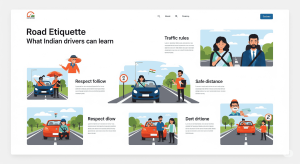
Rising traffic density and daily commuting pressure have made How to Minimize Road Rage an urgent topic for drivers and fleet operators across India. What once seemed like occasional frustration has evolved into a serious safety concern on urban roads. Aggressive reactions behind the wheel not only increase accident risk but also create an unsafe environment for everyone sharing the road. The good news is that most incidents are preventable when drivers adopt the right behavioural habits and stress management techniques. By combining emotional awareness with disciplined driving practices, individuals can significantly reduce the chances of conflict and contribute to safer urban mobility.
Modern driving is as much about mindset as it is about vehicle control. In crowded cities where delays are common and unpredictability is high, the ability to remain calm becomes a critical safety skill. Drivers who learn to regulate their reactions and anticipate risks are far less likely to become involved in confrontations.
How to Minimize Road Rage with Calm Driving Habits
The foundation of safer driving begins with self-control. Many road conflicts escalate because drivers react instantly to minor mistakes made by others. Honking excessively, tailgating, or making aggressive gestures often turns small irritations into major confrontations.
Developing calm driving habits starts with giving yourself extra time for travel. When drivers are running late, their tolerance for delays drops sharply. Planning journeys with buffer time reduces urgency and helps maintain patience in traffic. Maintaining a safe following distance is another powerful habit. It creates a psychological and physical safety cushion that prevents sudden braking and reduces emotional pressure.
Equally important is avoiding competitive driving behavior. Roads are shared spaces, not race tracks. When motorists shift their mindset from “winning space” to “sharing space,” overall stress levels drop noticeably. Consistency in lane discipline, smooth acceleration, and predictable signaling also help other road users feel secure, reducing the likelihood of hostile reactions.
How to Minimize Road Rage by Managing Driver Stress
Stress is one of the strongest hidden triggers of aggressive driving. Long commutes, work pressure, noise pollution, and heat can gradually build frustration before a driver even encounters traffic. Without conscious regulation, this stress spills over into driving behavior.
Simple pre-drive routines can make a significant difference. Taking a few deep breaths before starting the vehicle helps reset the nervous system. Listening to calm music or informative audio instead of loud, high-tempo content can also stabilize mood during long journeys.
Hydration and physical comfort matter more than many drivers realize. Fatigue, hunger, and dehydration reduce patience and impair judgment. Professional drivers are increasingly trained to recognize these physiological stress signals early and address them proactively.
When irritation does arise on the road, mental reframing is highly effective. Instead of assuming another driver acted intentionally, trained motorists treat it as a common human error. This small cognitive shift prevents emotional escalation and keeps attention focused on safety.
How to Minimize Road Rage Through Defensive Awareness
Situational awareness is a powerful prevention tool. Many confrontations begin when drivers are surprised by sudden maneuvers around them. By scanning the road environment continuously, motorists can anticipate potential conflicts and adjust early.
Defensive awareness includes checking mirrors frequently, observing traffic patterns ahead, and identifying high-risk zones such as busy intersections or merging lanes. When drivers expect unpredictability, they are less likely to react emotionally when it occurs.
Creating escape space is another key principle. Skilled drivers always maintain an exit option—whether through lane positioning or speed adjustment. This allows them to disengage smoothly from aggressive drivers without confrontation.
Technology can support this mindset as well. Features like rear cameras, blind-spot alerts, and telematics monitoring provide additional situational insight. However, technology works best when combined with disciplined human behavior.
Building a Safer Road Culture in India
Long-term improvement requires collective responsibility. While infrastructure and enforcement play important roles, everyday driver behavior ultimately shapes road culture. When more motorists adopt calm, predictable habits, the overall emotional temperature of traffic environments drops.
Organizations operating vehicle fleets have a unique opportunity to lead this change. Structured driver coaching, fatigue management policies, and regular behaviour assessments can significantly reduce aggressive incidents. Public awareness campaigns that promote courtesy and patience also help shift social norms over time.
For rapidly urbanizing regions in India, prioritizing behavioural safety is no longer optional. As vehicle numbers continue to grow, emotional discipline behind the wheel will become one of the most important factors in preventing crashes and conflicts.
Creating safer roads does not require dramatic changes—it begins with small, consistent actions taken by individual drivers every day. With the right mindset, proper stress control, and proactive awareness, urban mobility can become calmer, more predictable, and significantly safer for everyone.