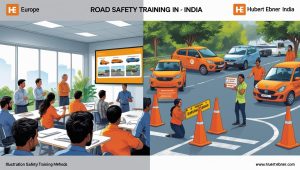
Drive safely at night a unique set of challenges that require more than basic driving skills. Reduced lighting, increased fatigue levels, unpredictable road behavior, and limited visibility can quickly turn a routine journey into a risky situation. At Hubert Ebner India, professional road safety training emphasizes that safe driving after dark is not just about experience — it is about preparation, awareness, and adopting disciplined driving habits.
Many drivers underestimate how dramatically visibility changes after sunset. Depth perception decreases, glare from oncoming headlights becomes more intense, and identifying pedestrians or obstacles takes longer. Understanding these limitations helps drivers adjust their approach to speed, distance, and decision-making.
Drive Safely at Night by improving visibility awareness
Visibility is one of the most critical aspects of nighttime driving. Drivers must learn to rely not only on headlights but also on observation techniques that help identify movement and potential hazards early. Keeping eyes constantly scanning the road rather than focusing on a single point allows better reaction time.
Adjusting mirrors correctly reduces blind spots and minimizes glare from vehicles behind. Drivers should avoid looking directly into high beams from oncoming traffic; instead, focus slightly toward the edge of the road to maintain orientation without losing visibility. Maintaining a safe following distance is equally important because reaction time naturally increases when visibility decreases.
Drive Safely at Night through vehicle readiness checks
A well-maintained vehicle significantly improves safety after dark. Headlights should be properly aligned to illuminate the road effectively without causing discomfort to other drivers. Clean lenses and functioning indicators ensure that signals remain visible even in low-light conditions.
Windshields and windows must be free from dust, scratches, or fog that can scatter light and reduce clarity. Checking tire condition and brake performance before long trips adds an extra layer of safety, especially when driving on poorly lit roads. Hubert Ebner India encourages drivers to adopt a habit of conducting quick pre-drive inspections, ensuring that essential components are functioning correctly before starting the journey.
Lighting inside the vehicle also matters. Excessively bright dashboard lights can reduce night vision, so adjusting interior brightness helps maintain focus on the road ahead. Small details like these collectively enhance safety and reduce stress during nighttime travel.
Drive at Night by managing fatigue and focus
Fatigue is one of the leading contributors to nighttime accidents. Even experienced drivers may experience slower reaction times and reduced attention levels when driving late. Planning journeys with adequate rest beforehand is essential. Short breaks during long drives help maintain alertness and reduce mental strain.
Avoid driving under the influence of alcohol or medications that cause drowsiness. Maintaining hydration and keeping the cabin well ventilated helps drivers stay refreshed. Listening to calm music or engaging in mindful breathing techniques can also help sustain concentration over longer distances.
Environmental factors such as weather conditions and unexpected obstacles require additional caution. Rain, fog, or dust can drastically reduce visibility, making slower speeds and increased following distance necessary. Drivers should remain alert for pedestrians, animals, or wrong-side vehicles, especially on roads with limited monitoring during nighttime hours.
Hubert Ebner India’s training programs focus on developing structured driving habits rather than relying solely on instinct. By learning to anticipate risks and respond calmly, drivers build confidence and improve safety outcomes. Defensive driving techniques combined with consistent awareness create a safer environment not only for drivers but for everyone sharing the road.
In conclusion, nighttime driving demands patience, preparation, and continuous awareness. By prioritizing visibility, maintaining vehicle readiness, and managing fatigue effectively, drivers can significantly reduce risks. Adopting disciplined habits ensures that every journey remains controlled and safe, regardless of lighting conditions or road challenges.