In the evolving world of mobility and road safety, a driver training system has become the backbone of modern driver education. Traditional training methods that relied only on classroom theory and basic road practice are no longer sufficient to meet today’s complex traffic conditions. With rising accident rates and increasing compliance requirements, organizations and training institutes are turning toward advanced, technology-driven solutions. For businesses working with Hubert Ebner India, adopting a structured and intelligent training approach is proving essential for building safer and more confident drivers.
Modern driver education focuses not just on vehicle handling but on awareness, decision-making, and risk prediction. Advanced systems integrate simulation, analytics, and real-time feedback to create a more immersive and measurable learning experience. This shift marks a significant step forward in how drivers are prepared for real-world conditions.
Why Driver Training System Is Transforming Road Safety
Road environments have become far more demanding than they were a decade ago. Urban congestion, high-speed highways, distracted driving, and mixed traffic patterns require drivers to think proactively rather than reactively.
Technology-enabled training addresses this gap effectively. Instead of learning only through limited road exposure, trainees can experience high-risk scenarios in a controlled environment. This dramatically improves preparedness without compromising safety.
Another major transformation is data-driven learning. Modern platforms track driver performance, identify weak areas, and provide targeted improvement plans. This personalized approach accelerates skill development and ensures consistent training quality.
Organizations also benefit from standardization. When companies deploy structured systems across their fleets, every driver receives the same level of professional instruction. This consistency reduces variability in driving behavior and improves overall safety outcomes.
Additionally, regulatory bodies and corporate clients increasingly expect measurable training results. Advanced systems provide detailed reporting, helping organizations demonstrate compliance and due diligence.
Key Technologies Behind Modern Driver Training System
Today’s training environments combine multiple technologies to create an immersive learning journey. Each component plays a critical role in improving driver competence.
High-Fidelity Simulators
Simulation technology allows trainees to experience complex traffic situations, adverse weather, night driving, and emergency scenarios without real-world risk. This controlled exposure builds confidence and sharpens decision-making skills.
Performance Analytics
Advanced platforms capture detailed driving data such as braking patterns, speed control, steering behavior, and reaction time. Trainers can use these insights to provide precise, personalized feedback.
Interactive Learning Modules
Digital theory sessions with multimedia content improve knowledge retention compared to traditional lectures. Visual learning helps drivers better understand road rules, hazard perception, and vehicle dynamics.
Integrated Assessment Tools
Automated evaluation systems ensure objective skill measurement. This removes subjectivity and helps maintain consistent training standards across different locations.
Cloud-Based Management
Centralized dashboards allow organizations to monitor driver progress, training completion, and risk profiles in real time. This is particularly valuable for large fleet operators.
Together, these technologies create a structured ecosystem that prepares drivers far more effectively than conventional methods.
Business Advantages of Training System
For organizations managing commercial fleets or corporate transport, the benefits extend well beyond improved driving skills.
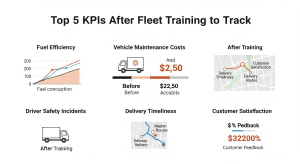
Accident reduction is the most immediate impact. Better-trained drivers make fewer critical errors, leading to lower repair costs and reduced insurance claims. Over time, this generates significant financial savings.
Operational efficiency also improves. Drivers who understand optimal driving techniques complete routes more smoothly, reducing delays and improving delivery reliability.
Fuel savings are another measurable advantage. Training emphasizes smooth acceleration, proper gear usage, and speed discipline, all of which contribute to better fuel economy across the fleet.
Vehicle longevity increases as well. Reduced harsh braking and aggressive driving minimize wear and tear on key components such as brakes, tires, and transmissions.
From a compliance standpoint, documented training records strengthen audit readiness. Many industries now require proof of structured driver development, making advanced systems a strategic necessity.
Perhaps most importantly, companies build a strong safety culture. When drivers see consistent investment in their development, engagement and accountability improve significantly.
Implementing Driver Training System Successfully
To achieve maximum value, organizations must approach implementation strategically rather than treating it as a one-time upgrade.
Start with a clear training objective. Whether the goal is accident reduction, regulatory compliance, or fleet efficiency, defining priorities helps shape the program structure.
Next, conduct a driver skill assessment. Understanding current competency levels ensures the training is neither too basic nor too advanced. Customized learning paths deliver better results than generic programs.
Blended learning is highly recommended. Combining simulator sessions, classroom instruction, and supervised on-road practice ensures comprehensive skill development.
Management support is critical for success. When leadership actively promotes safety initiatives, driver participation and program adoption increase significantly.
Regular refresher training should be scheduled to maintain performance levels. Driving behavior can change over time, and periodic reinforcement keeps safety habits strong.
Partnering with experienced providers like Hubert Ebner India ensures the system is aligned with global best practices while tailored to Indian road conditions.
Final Thoughts
The future of road safety education lies in intelligent, technology-driven learning environments. As traffic conditions grow more complex and safety expectations rise, organizations can no longer depend on outdated driver training system methods.
Investing in an advanced training ecosystem empowers drivers with the awareness, confidence, and skills needed for modern roads. For forward-thinking organizations, this is not just a technology upgrade—it is a strategic move toward safer operations, lower costs, and long-term mobility excellence.